
Bihar is facing a severe flood situation with the Central Water Commission issuing an 'Orange' bulletin as the Gandak and Ganga rivers flow above danger marks, leading to embankment breaches and inundation in Saran and other districts. Relief and rescue operations are intensifying with NDRF and SDRF teams deployed, and ration packets being air-dropped to affected areas.

The Ganga has crossed the danger mark in West Bengal, Bihar and neighbouring districts of Uttar Pradesh where Yamuna river is also in spate, while heavy rainfall has created a flood-like situation in some parts of Rajasthan where six persons have died so far.

The Ganga, Yamuna, and Sharda rivers in Uttar Pradesh have started to recede but continue to flow above the danger mark at several places. The State Flood Management Information System reports on the river levels and trends.

A girl was killed and two others were injured in rain-related incidents in Gonda district of Uttar Pradesh where major rivers were flowing above the danger mark at a number of places.

Heavy monsoon rains have caused the Ganga at Rishikesh and the Alakhnanda-Mandakini rivers in Rudraprayag to swell dangerously.

The Ganga river in Varanasi has surpassed its warning level, leading to the suspension of all boat operations and heightened monitoring by district authorities. The rising water levels, also affecting the Varuna river, have partially impacted 11 localities and displaced hundreds of families, who are now housed in relief camps as rescue efforts intensify.

Parts of Bihar are facing a potential deluge as major rivers like the Ganga, Gandak, Kosi, and Burhi Gandak show rising water levels. This surge is attributed to devastating flash floods and continuous rainfall in neighbouring Nepal, prompting authorities to open barrage gates and place disaster response teams on standby.

Heavy rainfall and swollen rivers have led to severe flooding in 15 districts of Bihar, affecting over 49 lakh people. Major rivers like the Ganga and Kosi are flowing above danger levels, prompting the deployment of disaster response teams and the establishment of relief camps and community kitchens for those displaced.

The Ganga continues to rise in Patna, inching closer to the danger mark and putting low-lying areas on alert.

Glimpses of swollen rivers, submerged ghats and waterlogged neighbourhoods after relentless monsoon rains lashed Uttarakhand on August 18, 2026.

Heavy rainfall has severely impacted Uttar Pradesh, Jharkhand, and Uttarakhand, leading to casualties, widespread flooding, and significant disruptions. The Char Dham Yatra was suspended, flights were cancelled, and standing crops were damaged. Other regions like Himachal Pradesh, West Bengal, Rajasthan, and Delhi also experienced varied weather conditions, including snowfall and light rains.

According to officials, the Ganga was flowing at 463.20 metres following which water filled up in Sangam Ghat, Ramkund, Dhaneshwar Ghat and Fuladi Ghat. There was also a tremendous jump in the water level of the Ganga after 2,000-3,000 cusecs of water was released from the dam of the GVK hydroelectric project built on the Alaknanda river.

Floods have forced hundreds of government schools across Bihar to shut, disrupting studies for thousands of students.

Torrential rains have caused widespread devastation across several Indian states, leading to at least 11 deaths in Assam and Uttarakhand, pushing rivers above danger levels, and disrupting daily life with landslides, floods, and school closures. States like Jharkhand, Uttar Pradesh, Himachal Pradesh, Delhi, West Bengal, and Jammu & Kashmir are also grappling with the monsoon fury, while Meghalaya faces an unusual rainfall deficit.
Incessant rainfall in Uttar Pradesh has caused floods in 13 districts, with major rivers like Ganga and Yamuna exceeding danger levels. Varanasi, Prayagraj, and other cities are severely affected, leading to displacement and disruption of daily life.

A landslide on the Kedarnath route in Uttarakhand killed two pilgrims and injured six, while heavy rain led to the temporary suspension of the Char Dham and Hemkund Sahib pilgrimages.
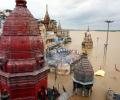
The water level of major rivers, including the Ganga and the Yamuna, in Uttar Pradesh has crossed the danger mark at several places.

The river has been flowing well above the danger mark and threatens to inundate settlements on the banks.
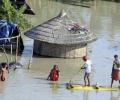
With reports of eight fresh deaths on Thursday, the total toll in Bihar flood increased to 135, with Bhojpur district accounting for 12 deaths in the second round of floods due to the swollen Ganga.

In Chamoli district, a flood-like situation has developed along the banks of a dozen rivers, including Alaknanda and its tributaries Pindar, Nandakini and Birhi.
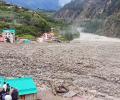
Landslides blocked arterial roads leading up to Dharali where dozens of people were trapped and many homes and cars swept away by the raging waters on Tuesday. Eleven Army personnel from the nearby camp in Harsil were among those missing.
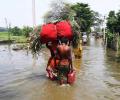
5.56 lakh people have been rescued so far from the 12 flood-affected districts. The government is plying 2,821 boats for evacuation.
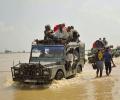
With the rise in level of the Ganga, Bihar Chief Minister Nitish Kumar has expressed apprehension of further rise in water level by Monday in view of release of water from Bansagar dam as flood-like situation prevailed in the state.

Heavy rains across India have led to widespread flooding, causing damage to infrastructure, displacement of residents, and disruption of normal life. Rescue efforts are underway in affected areas.

The floods have affected 31 lakh people across 13 districts and also widely damaged crops in different parts of the state.

More than 45 lakh people in 30 out of the total 38 districts of the state have been affected by the calamity in two phases since last month, according to the Disaster Management Department.

The floods have also damaged crops in 2 lakh hectares of land.

The death toll in Bihar floods today mounted to 64 with over 33 lakh people spread across 13 districts affected by the deluge.

A total 4.16 lakh people have been evacuated so far from the 12 flood-affected districts of Buxar, Bhojpur, Patna, Vaishali, Saran, Begusarai, Samastipur, Lakhisarai, Khagaria, Munger, Bhagalpur and Katihar.

At least 11 people lost their lives in Uttar Pradesh as monsoon rains lashed most parts of north India, with several rivers in the region flowing above the danger mark.
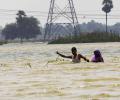
Swirling waters inundated 12 districts of Buxar, Bhojpur, Patna, Vaishali, Saran, Begusarai, Samastipur, Lakhisarai, Khagaria, Munger, Bhagalpur and Katihar.

Addressing a press conference virtually, India Meteorological Department Director General Mrutyunjay Mohapatra said September was likely to witness normal rainfall in the range of 91-109 per cent of the long period average of 167.9 mm.

Nine more people have died as heavy rains lashed Uttar Pradesh for the third day, taking the death toll to 28, while a red alert has been sounded on Tuesday in six districts including the worst-hit Barabanki and Gonda.

Only traces of rainfall were recorded in a few areas of the national capital on Thursday which continued to experience sultry weather.

Floods have ravaged 12 of the 37 districts in the state -- the worst-affected being Patna, Vaishali, Bhojpur, Khagaria and Samastipur districts.

Over 80 cattle lost their lives and over 600 houses were damaged in rain-related incidents.

Over 20 million people have been affected and 138 lives have been lost in the floods, which have hit Bihar's northern districts since the first week of July.

The water level rose above the danger mark in Haridwar and Delhi and the level at Bhakra dam was a foot above the permissible mark.

Six people were killed in rain-related incidents in Uttar Pradesh where major rivers flowed above the red mark today as showers drenched several parts of the state.

A flood alert was sounded in Srinagar city on Thursday as river Jhelum was flowing four feet above the danger mark after incessant rain, while 23 villages have been inundated by floods in south Kashmir districts of Anantnag and Kulgam.
